A good AI influencer name does not need to sound futuristic. It needs to be easy to say, easy to type, and distinctive enough that people can find the right account again.
The best choice usually emerges after a few unglamorous checks: say the name on a call, search it, inspect the available handles, and ask people what they remember the next day.
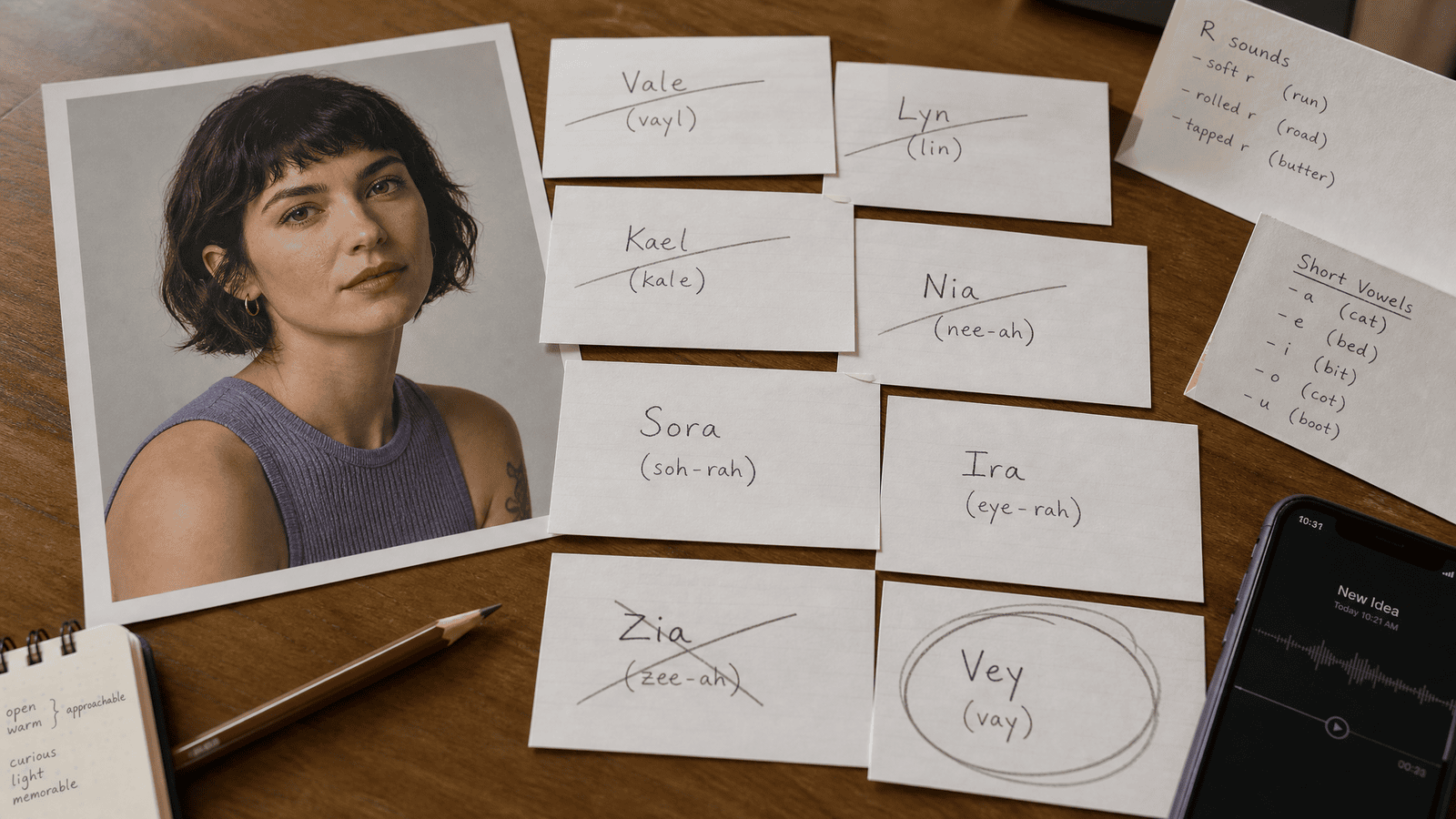
Start with the character, not a name generator
Write one sentence that defines the character before brainstorming:
A curious streetwear photographer who documents overlooked parts of big cities.
That sentence gives you useful constraints. A polished luxury name may feel wrong for this character, while an aggressively technical name may trap the account in an AI-only niche.
Decide four things first:
- The subject the character will cover
- The tone of voice
- The audience and primary language
- Whether the synthetic identity will be obvious in the name or explained in the bio
Build a shortlist with range
Generate 20 or 30 candidates, then cut hard. Include a mix of structures:
| Structure | Fictional examples | What it signals |
|---|---|---|
| Given name and surname | Mara Vale, Inez Rowan | Human and editorial |
| Mononym | Orin, Vela, Nomi | Distinctive and stylized |
| Alias | Studio Rook, Sunday Nova | Creative or project-led |
| Descriptive name | Mira Moves, Ada Afterdark | A clear topic or mood |
Examples are prompts, not available brands. Search every finalist before using it.
Avoid forcing AI, virtual, or digital into the name unless the technology itself is the subject. Disclosure belongs in the profile and content; the name still needs to work if the account grows into fashion, music, travel, or another category.
Use a five-part name test
Score each finalist from one to five on these criteria:
1. Say it
Read the name aloud in a sentence: “Have you seen the new post from ___?” If listeners regularly ask you to repeat or spell it, the name will create friction in podcasts, videos, and word-of-mouth recommendations.
2. Type it
Ask someone to write the name after hearing it once. A small spelling surprise can be memorable; several surprises are usually a nuisance.
3. Search it
Search the exact name and common misspellings. Look for established creators, public figures, products, sensitive associations, and crowded results that would make the character difficult to find.
4. Translate it
Check meanings and pronunciation in the languages of your likely audience. Automated translation is a useful first pass, but a native speaker is better at catching slang, awkward sounds, and cultural baggage.
5. Stretch it
Imagine the name on a profile, an event invitation, a product label, and a spoken introduction. A narrow joke can be fun at launch and exhausting a year later.
Check handles, domains, and trademarks
Handle availability matters, but an awkward exact match is not automatically better than a clean variation. Prefer a short, consistent modifier such as studio or world over strings of numbers and underscores.
Check the main social networks you intend to use, relevant domains, and official trademark databases. In the United States, start with the USPTO trademark search. In the European Union, use EUIPO eSearch. A database search is only a screen, not legal clearance; get professional advice before investing heavily in a name.
Do not imitate the name, appearance, or positioning of a real person closely enough to imply a connection that does not exist.
Test memory, not taste
Show three finalists to a small group that resembles the intended audience. Ask what each name suggests, then ask again a day later which ones they remember. This is more useful than asking which name is “best,” which tends to produce polite but vague opinions.
A simple scorecard keeps the choice grounded:
| Candidate | Easy to say | Easy to find | Fits the character | Works across markets | Total |
|---|---|---|---|---|---|
| Name A | /5 | /5 | /5 | /5 | /20 |
| Name B | /5 | /5 | /5 | /5 | /20 |
| Name C | /5 | /5 | /5 | /5 | /20 |
Lock the identity after choosing
Once the name is selected:
- Reserve the important handles and domains.
- Write down the spelling, capitalization, and pronunciation.
- Add a clear AI disclosure to the profile.
- Create a short voice guide with words the character uses and avoids.
- Keep records of your searches and registrations.
The name is one part of the identity system. Consistent visuals, a recognizable point of view, and honest disclosure will do more for recognition than a clever name alone.
Frequently asked questions
Should an AI influencer have a human name?
It can, but it does not have to. A human-style name suits a character-led account; a mononym or studio-style alias can work better for a visibly fictional or artistic project.
Should the name include “AI”?
Only when AI is central to the subject or positioning. You can disclose that the character is synthetic in the bio and captions without turning the technology into the entire brand.
What if the exact social handle is taken?
Use one consistent, readable modifier across platforms. Avoid impersonating the existing account or choosing a variation that people will routinely mistype.
Can I trademark an AI influencer name?
Potentially, depending on the jurisdiction, category, and existing marks. Search official databases first and consult a qualified trademark professional for clearance.
When should I rename the character?
Rename early if there is a rights conflict, a harmful meaning in an important market, or persistent confusion with another creator. Once an audience recognizes the name, a change becomes much more expensive.