An AI influencer account works when the character is recognizable, the posts are useful, and the operator is honest about what is synthetic. It fails when the feed is thirty polished portraits with no point of view.
This is a 30-day launch plan for the account itself: positioning, profile setup, post formats, disclosure, publishing, and review. If your main challenge is fashion-model art direction, start with the AI Instagram model playbook.
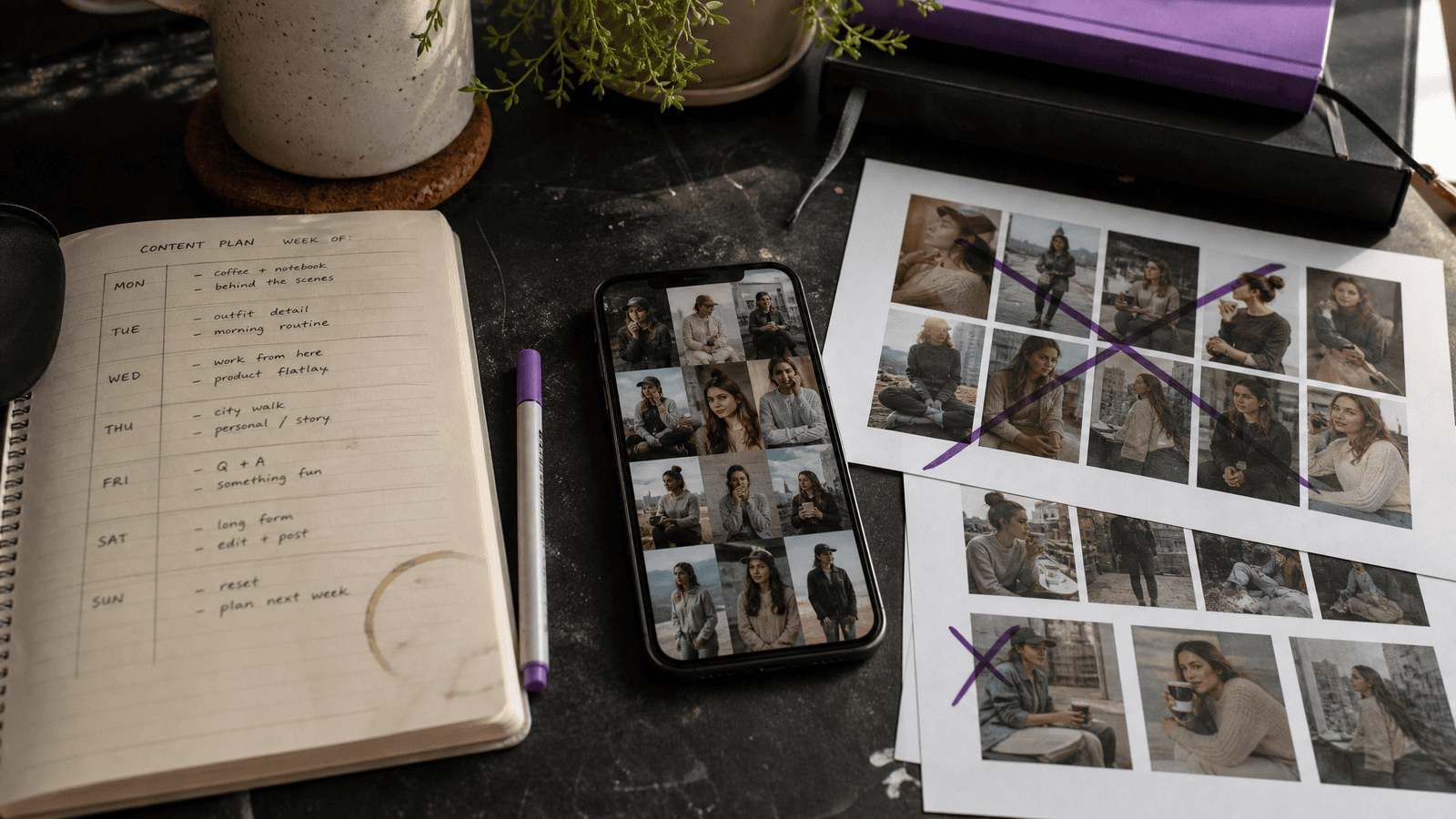
Days 1–3: define the account in one page
Write a compact operating brief:
- Audience: one group with a shared interest or problem.
- Promise: what a follower gets repeatedly.
- Character: adult appearance, temperament, boundaries, and disclosure language.
- Three pillars: the only themes you will publish in month one.
- Visual rules: palette, framing, texture, and two recognizable details.
- No-go list: claims, brands, or scenarios you will avoid.
“Lifestyle” is too broad. “Small-space interior ideas explained by a fictional design student” is workable. The narrower version tells you what to post tomorrow.
Days 4–7: prove the character is repeatable
Create a reference sheet before producing the feed. Test front, profile, full-body, candid expression, ordinary daylight, and one object interaction. Review the face, hands, clothing continuity, and apparent age.
Keep the model and identity settings fixed while testing. Save every prompt and rejection reason. If the character only looks right in one close-up pose, the account is not ready.
The consistent character workflow has a reusable acceptance test.
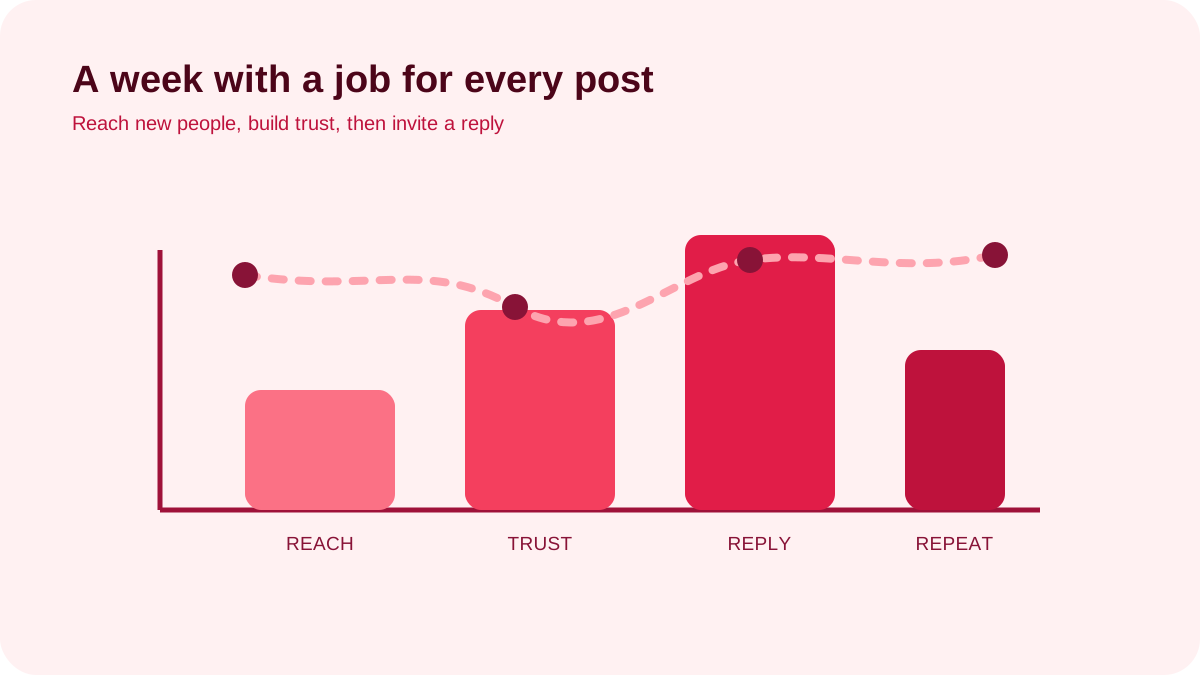
Days 8–12: prepare nine posts
Use three formats, three times each.
A saveable carousel
Teach one thing in three to five frames. Examples: three ways to style one jacket, a lighting breakdown, or the rejected image and the corrected version.
A recurring short video
Choose a format you can repeat without inventing a fake life: a weekly design opinion, a product-composition demo, or a narrated process note. Keep the first videos visually simple so identity drift is easy to spot.
A conversation post
Ask for a real decision, not generic engagement. “Which crop makes the coat read better?” gives people something specific to answer.
Write the captions now. If a caption only works by pretending the character visited a place or used a product, rewrite the concept.
Days 13–15: set up the profile
Use a clear portrait that survives a small circular crop. Pick a handle that is easy to say aloud and not confusingly close to a real creator. The AI influencer names guide includes a practical availability test.
The bio should say what the account covers and that the character is virtual or AI-generated. Add one link with a clear destination. Do not turn the bio into a stack of keywords.
Create story highlights only when you have material for them. Useful early highlights are “About,” “Process,” and “Disclosure.” Empty categories make the account look staged.
Days 16–25: publish and participate
Post at a pace that leaves time for replies and quality control. There is no universal schedule that guarantees reach. Start with three or four feed posts per week and adjust when your own data says the audience wants more or less.
After posting:
- answer specific comments with specific replies;
- save recurring questions for future posts;
- note which frames people mention;
- spend time in the actual niche, not only on AI-creator accounts;
- avoid automated comments and follow-for-follow schemes.
Do not buy followers. It corrupts the only data you need in month one: whether real people care about the premise.
Days 26–30: review signals, not vanity
Record a few useful metrics for each post:
| Signal | What it may tell you |
|---|---|
| Saves | The post was useful enough to revisit |
| Shares | The idea traveled beyond existing followers |
| Profile visits | The post made people curious about the account |
| Follows from post | The account promise was clear |
| Replies and DMs | The character or topic created conversation |
Compare formats, not isolated winners. One post may spike for a reason you cannot repeat. A recurring format that performs steadily is a better foundation.
Also review quality failures. Did viewers notice a hand, reflection, label, or identity change that your team missed? Add that item to the next approval checklist.
Label AI and sponsored content
State plainly that the character is virtual. For realistic generated video or audio, use the platform's available disclosure controls. Meta's labeling systems and requirements change, so review Meta's published guidance before launch and again before paid campaigns.
Sponsored content needs commercial disclosure as well. “AI-generated” does not replace “ad,” and “ad” does not tell viewers the person is fictional.
Do not rush monetization claims
You can sell content production before an account has a large audience, but that is a creative-service offer, not influencer reach. If a brand wants distribution, show real account data. If it wants assets, show a portfolio and license the usage clearly.
Avoid made-up follower thresholds and guaranteed rate ranges. Scope the work instead: concepts, assets, aspect ratios, revisions, delivery, usage period, and paid-media rights.
Frequently asked questions
How often should an AI influencer post on Instagram?
Often enough to learn, slowly enough to review. Three or four strong posts per week is a sensible test, not a rule. Change it using your own quality and audience signals.
Do I need Reels?
No format is mandatory, but short video can reveal voice, timing, and identity continuity that static images cannot. Start with simple shots and short scripts.
Should the account pretend the character is real?
No. A fictional character can still be entertaining and useful. Clear disclosure protects trust and forces the content to stand on its own.
What is a good month-one goal?
A repeatable character, nine credible posts, one format worth continuing, and a list of actual audience questions. Those are inputs you can use. A promised follower or income number is not.