A good TikTok series gives viewers a reason to watch the next episode. The AI character can make that series recognizable, but a recognizable face cannot rescue a video with nothing to say.
Start with a small production test: three videos that answer three related questions. You are testing whether the character, writing, and editing work together. You are not trying to prove that a posting schedule can guarantee distribution.
Give the character a job
Write the series promise in one sentence. “A virtual stylist explains one outfit decision per video” gives you a clearer brief than “an AI lifestyle influencer.” It also tells you what to leave out.
Choose an adult fictional character and a voice you can sustain. Decide what the character knows, how it explains things, and what it will never pretend to have experienced. A virtual stylist can compare silhouettes. It should not claim to have worn a coat through a winter commute.
Keep a reference portrait, a short voice sample, and a few visual rules. Hair, facial proportions, wardrobe, and speaking pace should feel continuous. Use the character consistency guide to test more than a flattering close-up.
Write one useful episode before generating footage
Try this editorial example for a styling series:
| Part | Example |
|---|---|
| Opening | “These two jackets change the same outfit in different ways.” |
| Evidence | Show the two looks side by side and identify the hemline. |
| Explanation | Describe how that line changes the outfit's proportions. |
| Ending | Ask which version viewers would choose and why. |
The example is a production brief, not a promise of reach. Its strength is that the opening names a visible question and the video answers it.
Read the script aloud. Remove greetings, repeated setup, and any sentence the picture already communicates. Avoid “You won't believe this” unless the payoff actually deserves that setup. The opening should help someone decide whether the video is relevant to them.
Match the footage to the explanation
A talking portrait can introduce the idea, but the viewer needs to see the evidence. Cut to the garment, diagram, comparison, or screen recording when that is more useful than another shot of the host.
For your first batch, keep camera movement and gestures modest. Generate short shots and inspect the transitions. A face that changes between cuts, a hand that melts into a sleeve, or a moving product label can undermine an otherwise clear explanation.
If you use lip sync, approve the audio before animating it. Fixing a mispronounced word afterward can mean regenerating the shot. Use a voice you have permission to use, and check music permissions for the intended account and use.
Review the actual upload
Watch the final export on a phone, once with sound and once without it. Check that:
- captions match the spoken words and remain readable;
- interface overlays do not hide essential details;
- the first frame makes sense without a caption explaining it;
- the character stays recognizable through each cut;
- the ending delivers what the opening promised.
Keep the original export and production files. Reusing a clean master is easier than rebuilding a video from a downloaded social post.
Be explicit about the fiction
Say in the profile that the host is virtual. TikTok requires labeling for realistic AI-generated images, audio, and video; follow its AI-generated content guidance when posting. A profile description does not replace the post's disclosure controls.
Keep commercial disclosure separate from AI disclosure. Also review the substance: a label does not make a fabricated product testimonial or an impersonation acceptable.
Learn from a small series
Publish at a pace that leaves time for review and replies. Record the topic, opening, length, production time, and audience response for each episode. Where analytics are available, look at viewing behavior alongside comments and profile visits.
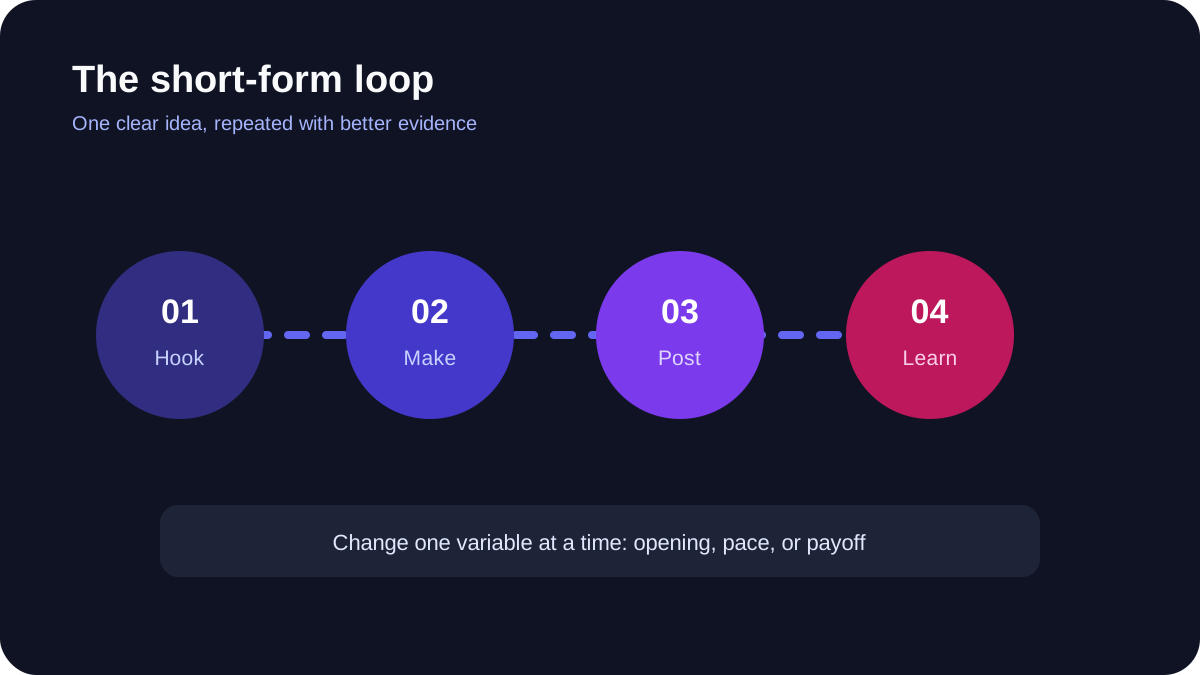
An early drop may mean the setup is slow; it may also mean the topic reached people who were not interested. Treat it as a question to investigate. Compare several similar videos before making a firm decision, and change one major variable at a time.
Useful comments can become the next script. If viewers keep asking to see the back of the jacket, make that comparison. There is more editorial value in a real unanswered question than in copying an unrelated trend.
Frequently asked questions
Do I need to post every day?
No fixed schedule guarantees growth. Choose a pace you can maintain without skipping script checks, visual review, or audience replies.
Does every video need a talking avatar?
No. Use the character when it helps introduce or connect ideas. A clear demonstration can carry the rest.
What should the first batch achieve?
Three publishable episodes, a consistent character, and a realistic estimate of the work involved. Audience growth is something to observe, not promise.