An “AI model girl” is better understood as an adult virtual model: a fictional character used in fashion, beauty, fitness, or commercial images. A convincing project needs more than an attractive face. It needs a clear brief, repeatable identity, realistic art direction, and rules that prevent the character from becoming a collection of unrelated portraits.
Keep the character adult and clearly fictional
Use adult subjects, document that the character is synthetic, and never train on a real person's likeness without permission. Avoid school-coded styling or ambiguous age cues.
Write a model brief that a photographer could use
Skip vague directions such as “beautiful, trendy, perfect.” They produce interchangeable results. Write a brief with observable choices:
- apparent adult age range;
- face shape, skin tone, hair texture, and one or two stable features;
- posture and expression range;
- wardrobe silhouette and color palette;
- the audience and commercial categories;
- visual references you own or are allowed to use;
- exclusions, including brands, risky themes, and misleading claims.
Give the character one memorable element, not ten. A blunt fringe, a gap tooth, a silver streak, or a particular jacket can help recognition. Too many signature details make every image look like costume continuity.
Approve identity before styling
Creators often fall in love with a finished image because the clothes and lighting work. Then they discover the face cannot be reproduced outside that setup.
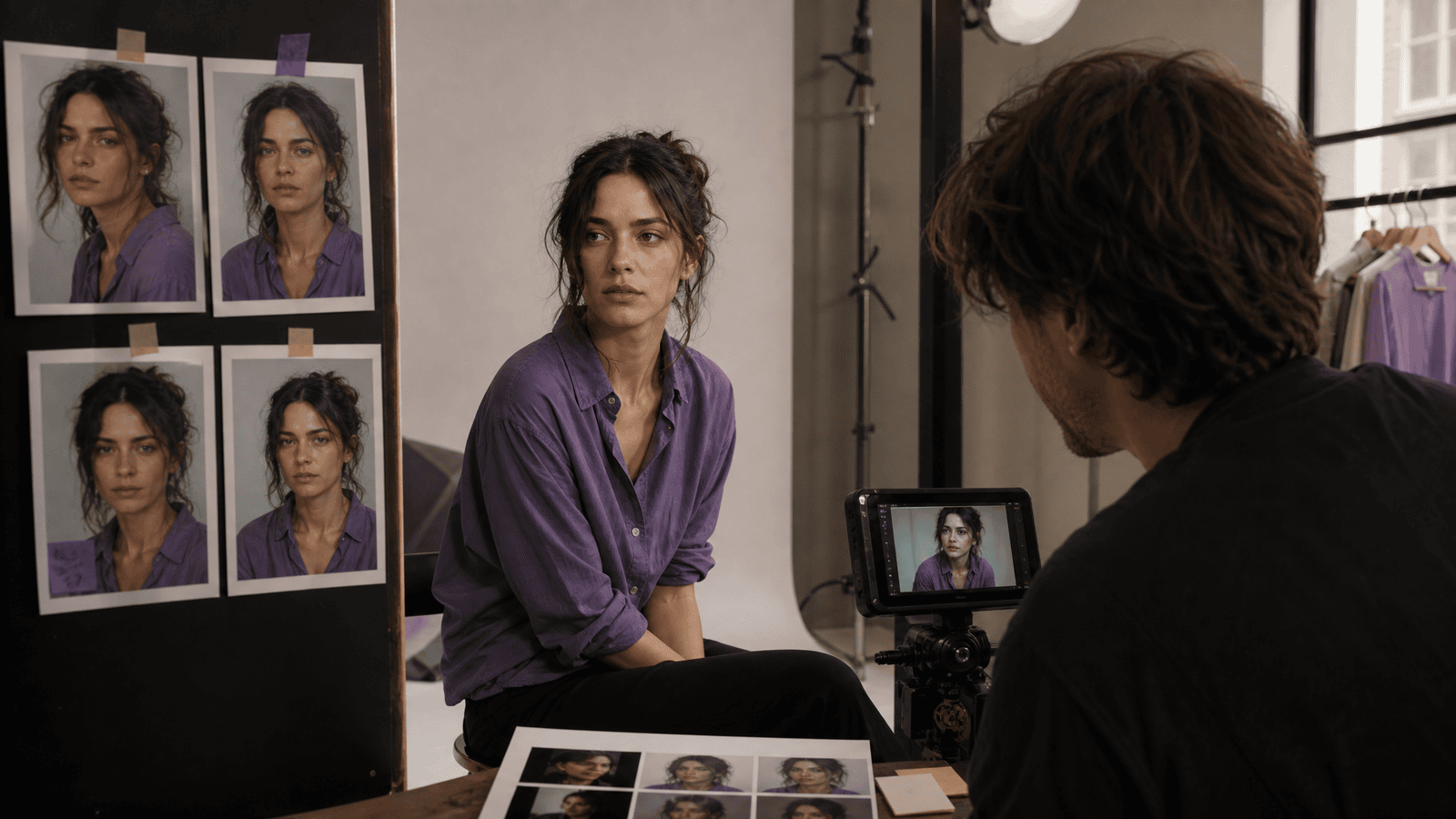
Test the identity in neutral conditions first:
- a clean front portrait;
- a profile and two three-quarter angles;
- neutral, smiling, and focused expressions;
- soft daylight and harder side light;
- close, medium, and full-body framing.
Look for stable bone structure, eye spacing, skin details, and hairline. Expect natural variation. “Consistent” means recognizably the same character, not a pixel-identical face pasted onto every scene.
Save the approved images as a reference sheet. The photo-based character guide covers dataset preparation when you have the rights to the source material.
Build a portfolio around commercial problems
A portfolio should show that the character can handle a brief. Try four small sets:
Fashion continuity
Show the same outfit from three angles. Check seams, closures, patterns, and jewelry between frames. Clothing drift is often more obvious to a brand than facial drift.
Product handling
Use simple, unbranded packaging. Generate pouring, holding, opening, or applying actions. Inspect fingers, contact shadows, label geometry, and whether the product changes size.
Everyday lifestyle
Place the character in an ordinary kitchen, desk, street, or gym. A credible location has clutter, wear, and imperfect light. A luxury apartment is not a personality.
Short sequence
Create three frames from one moment: picking up an object, using it, and setting it down. This reveals continuity problems that a single hero portrait can hide.
Prompt like a creative director
Separate the prompt into stable identity and variable scene information.
Stable block: facial features, hair, apparent adult age, build, and reference-image instructions.
Variable block: action, wardrobe, location, camera position, light, and mood.
Describe what the subject is doing with their hands. “Holding a bottle with both hands at chest height” is more useful than “product shoot.” Ask for natural skin texture, fabric creases, and ordinary background detail only when they fit the shot.
Do not solve every flaw by adding more adjectives. If a generation fails, identify the failure and change one thing. Better references or a simpler pose usually help more than a longer prompt.
Edit before you publish
Use a quick quality-control pass:
- zoom into hands, teeth, earrings, and garment edges;
- compare the face against the approved reference sheet;
- remove accidental logos and unreadable text;
- check reflections and shadows;
- view the image at phone size;
- ask whether the setting tells the same story as the caption.
Keep a rejection folder. It teaches you which poses, lenses, or styling choices break the character.
Turn the portfolio into a UGC offer
UGC usually means user-generated content, but a virtual model is not a customer. Sell the work accurately as synthetic spokesperson content, virtual-model production, or AI-assisted campaign creative.
A useful starter offer defines:
- the number and format of assets;
- whether the brand supplies product photography;
- the concept and shot list;
- revision rounds;
- delivery date;
- organic and paid usage rights;
- the disclosure the brand will use.
Do not invent market rates or claim that a certain follower count guarantees a deal. Quote from the scope and the rights. A three-month paid-ad license is different from permission to post one image organically.
For production detail, read the AI UGC guide.
Keep the account honest
Say that the model is virtual in the profile. Label sponsored relationships clearly. If a post demonstrates a product, do not write first-person claims about results the fictional character could not experience.
The character can still have a voice. Opinions about styling, design, or process are fair territory. False testimonials, invented trips, and fake body transformations are not.
Frequently asked questions
Can I use one photo to create the character?
Some tools accept one image, but a single reference leaves the model guessing about profiles, expressions, and full-body proportions. A rights-cleared multi-angle set is safer when the tool supports it.
Why does the face change between images?
Common causes include weak references, conflicting identity language, model changes, extreme angles, and heavy stylization. Return to a neutral test and change one variable at a time.
Is perfect consistency possible?
No generative workflow should promise perfection. The practical target is recognizable identity with an editorial review step. Difficult poses and video frames will require more checking.
Can I monetize a virtual model?
You can sell creative production or build an audience, subject to platform rules, advertising law, contracts, and the rights attached to your tools and source material. Revenue is not automatic and varies too widely for honest guarantees.
What is the best first deliverable?
Make a six-image reference set and one three-frame product sequence. That small test exposes most identity, hand, and object-continuity problems before you build a public feed.