AI UGC is a common name for ads that borrow the camera language of user-generated content while using a synthetic presenter or generated scene. Strictly speaking, it is not user-generated when no customer made it. “Synthetic creator ad” or “UGC-style AI ad” is often the more accurate description.
The format works best as a production method for testing hooks, framing, and scripts. It should not be used to fabricate a customer, testimonial, or personal result.
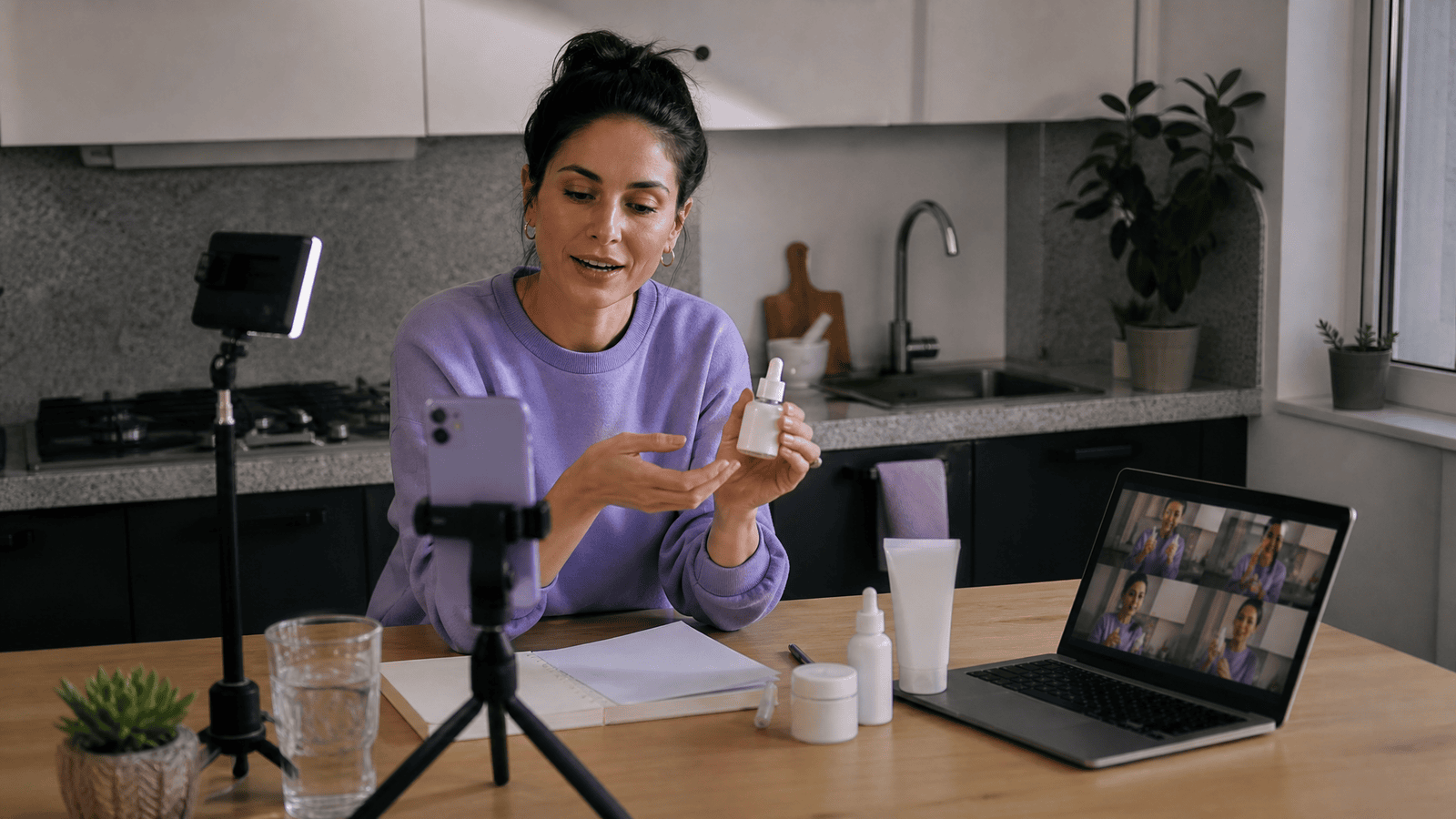
Start with the claim, not the avatar
Before choosing a face or location, write the single claim the ad needs to communicate. Then classify it:
- Product fact: size, material, compatibility, ingredients, or feature.
- Demonstration: what the viewer can directly see the product do.
- Opinion: a clearly framed creative judgment.
- Performance claim: a measurable outcome that needs evidence.
- Testimonial: a person's experience, which a fictional character cannot honestly provide.
If the concept depends on “I used this for two weeks” or “this cured my problem,” stop. A synthetic presenter did not have that experience. Rewrite the ad as a demonstration or use a real, documented customer.
Write a brief a small creator could shoot
A useful brief fits on one page:
| Field | Decision |
|---|---|
| Audience | Who has this problem? |
| One claim | What can the ad truthfully say? |
| Proof | What will the viewer see or what evidence supports it? |
| Setting | Where would this product naturally be used? |
| Presenter | Adult appearance, voice, wardrobe, and disclosure |
| Deliverables | Lengths, aspect ratios, variants, and captions |
| Rights | Organic, paid media, territory, and duration |
| Exclusions | Unsupported claims, logos, unsafe themes, competitors |
Ordinary specificity beats aspirational vagueness. “Apartment kitchen at 7 a.m., phone on a cereal box, cloudy window light” gives the scene texture. “Authentic lifestyle content” does not.
Script for a person, not a landing page
Read the script aloud. Remove any sentence you would not say to a friend while holding the product.
A short structure:
- Problem: one concrete situation.
- Demo: show the product or workflow doing one thing.
- Evidence: point to an observable detail or qualified source.
- Next step: tell the viewer what to do without manufacturing urgency.
Avoid stacked adjectives, fake surprise, and “game changer.” Let the shot carry part of the message.
For a 15-second version, one claim is enough. Longer scripts need a new visual beat every few seconds, not faster speech.
Create a believable presenter
Use an adult character with a rights-safe identity and a clear role in the campaign. Keep the face, hair, apparent age, voice, and wardrobe stable across variants.
Do not default every product to the same polished young woman in a luxury apartment. Match the presenter to the customer and the setting to the product. A workshop tool, bookkeeping app, and moisturizer should not share the same scene language.
The AI model guide covers reference sheets and commercial portfolio tests.
Generate the hard frame first
Find the shot most likely to fail: opening the package, holding a small object, touching the face, pouring liquid, or turning toward camera. Create and approve that frame before producing the rest of the sequence.
Check:
- fingers and object contact;
- packaging shape and label integrity;
- shadows and reflections;
- product scale;
- face and wardrobe continuity;
- whether the product action is physically possible.
When exact packaging matters, use approved brand photography and an editing or compositing workflow. A text prompt will often redesign the package.
Add voice and motion carefully
Keep the first cut simple: locked camera, modest gestures, short lines, and clean audio. Large head turns and objects passing in front of the face increase identity drift.
Review lip sync at normal speed and frame by frame around hard consonants. Watch the jaw, teeth, earrings, hairline, and hand-to-face contact. If the presenter becomes less recognizable midway through, shorten the shot or reduce movement.
Make variants that test one idea
A useful test changes one variable:
- the first line;
- the opening frame;
- direct-to-camera versus voice-over;
- problem-first versus demonstration-first;
- short versus longer proof.
Do not change the presenter, script, product angle, music, and offer at once. You will know which ad won, but not why.
Track hold rate, click-through rate, conversion rate, comments about trust, and the specific point where viewers leave. Interpret the result in context. A high click rate with weak conversion may mean the hook overpromised.
Disclosure and rights are part of production
Mark the presenter as virtual or AI-generated in a clear place. Use platform disclosure tools for realistic generated media when required. Sponsored content still needs an advertising disclosure.
Meta publishes guidance on how it identifies and labels some generated media; review the current Meta policy before launching a campaign.
Your contract should also cover:
- who owns the character;
- who owns prompts, source images, voice, and final edits;
- where the assets may run;
- paid-media and whitelisting rights;
- usage period and territory;
- revision limits;
- prohibited claims and categories;
- deletion or takedown duties.
The generation tool's commercial terms still apply. Check them for the exact plan used to create the asset.
A clean production checklist
Before delivery, verify:
- the product and claim match the approved brief;
- the presenter is clearly adult and consistent;
- hands, teeth, reflections, and labels survive full-size review;
- no accidental brand or copyrighted element appears in the background;
- subtitles match the spoken words;
- AI and advertising disclosures are present;
- sources for measurable claims are saved;
- file names, aspect ratios, and safe zones match the media plan;
- usage rights are written down.
Frequently asked questions
Is AI UGC actually user-generated content?
Not when it is produced by a brand or studio with a synthetic presenter. It uses the visual conventions of UGC. Accurate naming helps clients and viewers understand what they are seeing.
Can a virtual presenter give a testimonial?
It cannot truthfully claim personal use or results. Use a demonstration, clearly fictional scenario, or a real customer's documented words with permission and appropriate disclosure.
How many variants should I make?
Enough to test a specific question. Three opening hooks against the same body is more informative than twenty unrelated ads.
Is AI UGC always cheaper?
No. It can reduce some scheduling and reshoot costs, but art direction, generation, editing, approvals, rights, and media spend remain. Complex product interactions may cost more to fix than to film.
What should the first test be?
Make one short demonstration with three opening frames. If the product, hands, claim, and disclosure all survive review, expand from there.