People search for a HeyGen alternative for three practical reasons, and the right replacement depends on which of the three applies to you. The first is cost per finished minute: HeyGen's plans are credit-based, and teams producing many short clips often find that the credit math punishes volume. The second is look: HeyGen's stock presenters are built for corporate, training and explainer video, while a growing share of buyers want creator-style footage that reads as a person filming themselves for TikTok, Reels or a paid social ad. The third is programmatic use: developers who want to generate presenter or character video from code find that API access sits on the higher tiers or behind sales conversations.
This guide compares HeyGen with ten alternatives. Every plan name and price below was checked on 29 September 2026 against the product's own public pricing page. Where a company publishes no figure, the table says so instead of guessing. Treat the prices as a snapshot: avatar vendors change plans often, and a figure that was correct on the day of checking can move within weeks.
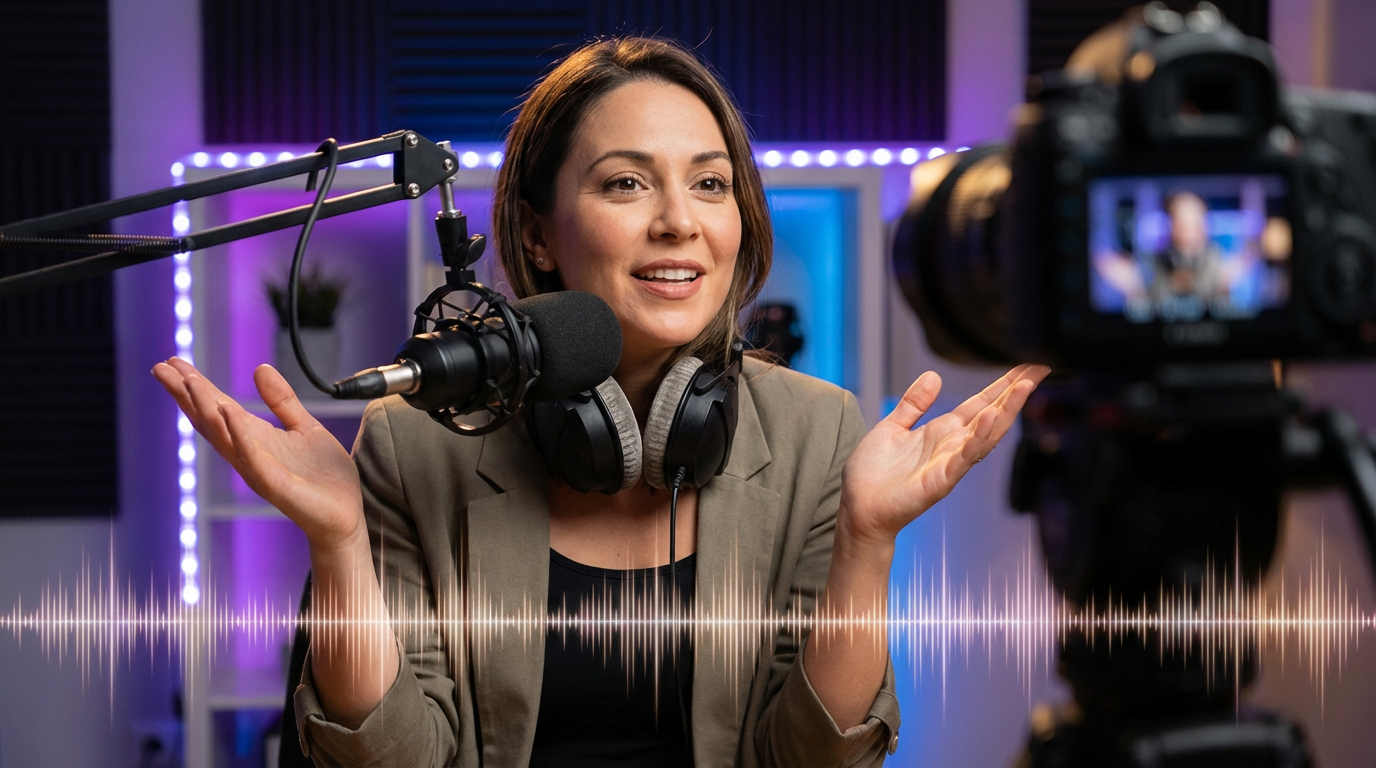
Editorial illustration of a synthetic presenter workflow; not a screenshot of any product.
How to read this comparison
Every product here can put a talking face on screen. What separates them is the type of face, the length of video the plan actually buys, how the lip sync is produced, and whether you can drive the whole thing from a script.
- Avatar type describes where the on-screen person comes from: a licensed stock presenter library, a personal avatar trained from your own footage, or a generated character that never existed and that you can reuse across content.
- Lip sync is either baked into a presenter pipeline (the vendor animates its own avatars) or offered as a standalone tool that animates any face in a photo or video to any audio.
- API means a documented, self-serve developer surface, not a sales-gated integration.
- Starting price is the cheapest paid plan on the public pricing page, on monthly billing unless noted. Annual discounts are listed when the page shows them.
MakeInfluencer.ai publishes this guide, so read the section on our own platform with that in mind. The strongest way to use the comparison is to shortlist two or three products, then run the one-afternoon test described near the end of the page.
HeyGen alternatives at a glance
| Product | Best for starting your search | Avatar type | Lip sync | API | Free tier | Starting paid price (checked 29 Sep 2026) |
|---|---|---|---|---|---|---|
| HeyGen (baseline) | Corporate presenters, translation, interactive video | Stock library plus custom avatars | Built into avatar pipeline | Pricing shown inside the app, not on a public page | Yes, 3 videos per month up to 1 minute, watermark | Creator $29 per month ($24 per month annual) |
| MakeInfluencer.ai | Creator-style and UGC video with a reusable AI character | Generated characters you create and reuse | InfiniteTalk lip sync, Seedance 2.5 Talking Avatar via API | Yes, REST plus MCP connector, same credits as the app | No free plan at time of checking | Creator $39 per month |
| Synthesia | Training, onboarding and localized corporate video | Stock library plus personal avatars | Built into avatar pipeline | On Creator plan and above | Yes, 10 minutes per month, watermark | Starter $29 per month ($18 per month annual) |
| D-ID | Interactive agents and expressive photo avatars | Photo-driven and expressive avatars | Built into avatar pipeline | Yes, with real-time streaming | Free trial advertised, terms not shown | Not extracted from the public page |
| Hedra | Audio-driven characters and multi-model creative work | Generated characters from an image | Audio-driven character animation | Yes, API v3 plus MCP server | "Start free" advertised, allowance not shown | Basic $20 per month |
| Arcads | Volume UGC ads with a large actor library | Stock AI actors plus custom avatars | Built into actor pipeline, lip sync API mentioned | Mentioned on site | Free trial mentioned, duration not shown | No public pricing page |
| Creatify | Product ads from a URL with AI actors | Stock actors plus custom avatars | Built into actor pipeline | Enterprise plan, MCP on Pro | Yes, 10 credits per month, watermark | Starter $39 per month |
| Captions | Creator videos with a digital twin from your phone | Digital twin of you, AI actors | Built into pipeline | Not shown | Yes, editing tools only, no generative features | Max $24.99 per month |
| Vidnoz | Budget avatar video with a huge template library | Stock library | Built into avatar pipeline | Not shown | Yes, daily credits, 3-minute cap, watermark | $2 per credit on monthly billing, 15-credit bundle |
| Akool | Face swap, streaming avatars and video translation on one plan | Stock avatars plus fine-tuned studio avatar | Built into pipeline | Pro Max plan and above | Not shown | Starter $12 per seat per month |
| Colossyan | Learning and development with SCORM export | Stock library plus custom avatars | Built into avatar pipeline | Professional plan, 360 minutes per year | 14-day trial, no card required | Starter $27 per month |
| Elai | Simple minute-based avatar video for small teams | Stock library | Built into avatar pipeline | Not shown | Yes, 1 minute | Creator $29 per month ($23 per month annual) |
HeyGen itself: the baseline you are comparing against
HeyGen's public pricing page listed five plans when checked. The Free plan costs nothing, allows three videos per month of up to one minute each, includes one custom avatar and more than 500 stock avatars, keeps the watermark, and supports 30 or more languages. Creator is $29 per month, or $24 per month on annual billing, with 600 credits per month, videos up to 30 minutes, more than 700 stock avatars, 175 or more languages, watermark removal and one voice clone. Pro is $49 per month with 1,000 credits, 4K export and expanded voice cloning. Business is $149 per month plus $20 per seat, with 1,500 credits, videos up to 60 minutes, five or more custom avatars, SAML single sign-on, interactive video with quizzes and branching, and SCORM export. Enterprise is quoted by sales with no maximum video duration.
HeyGen's homepage names its current avatar model Avatar V, a Video Agent that produces finished videos from a prompt, AI Studio for text-based editing, Video Translation with lip sync, LiveAvatar for interactive sessions, voice cloning, and support for "more than 175 languages and dialects." API pricing redirects into the logged-in developer dashboard, so it is not visible on a public page and is not reproduced here.
The important takeaway is the shape of the offer. HeyGen sells credits that convert into presenter minutes, with the best features (4K, interactive video, SCORM, SSO) on Business. If your work looks like that list, HeyGen is a reasonable default. If your work looks like short creator clips, product demos, character-driven content or anything you want to generate from code, the alternatives below are worth a closer look.
MakeInfluencer.ai
Publisher's note: this is our own platform. The description follows the same structure as every other entry and is limited to what the product page and documentation state.
Publicly described strengths. MakeInfluencer.ai is built around a reusable AI character rather than a stock presenter. You define or train a persona once, then generate photorealistic images and videos of that same character across scenes, outfits and formats. The image lineup leads with GPT Image 2.5 from OpenAI and includes Google's Nano Banana Pro and Nano Banana 2 and ByteDance's Seedream 5.0 Pro. The video lineup leads with ByteDance Seedance 2.5, which supports native audio and up to 30 reference images, alongside Alibaba Wan 3.0, Google Veo 3.1 and Kuaishou Kling 3.0. Lip sync is a standalone tool on the lip sync page powered by InfiniteTalk, which animates a still image or a video to any audio track, and the API exposes a Seedance 2.5 Talking Avatar endpoint for presenter-style clips. Every model is available through a REST API and an MCP connector for Claude, Cursor and similar clients, at the same credit prices as the web app.
Where it falls short. There is no library of licensed human presenters, so if you want a recognizable stock spokesperson in a suit, HeyGen or Synthesia will get you there faster. There is no video translation or dubbing product, no SCORM export and no interactive branching video. There was no free plan at the time of checking; credits are purchased on monthly plans or one-time bundles, so evaluating the platform means buying the smallest plan.
Best for. Creators, agencies and ecommerce teams that want creator-style or UGC-style video with a consistent AI persona, and developers who want the same generation stack behind an API. Plans checked in the codebase on the same date: Creator at $39 per month, Pro at $89 per month and Studio at $199 per month, each with a monthly credit allowance shown on the pricing page. Credit costs are previewed before every generation and documented per model on the developer docs.
Synthesia
Publicly described strengths. Synthesia is the closest like-for-like replacement for HeyGen's corporate use case. The public pricing page lists a Free plan with 10 video minutes per month, nine avatars, 160 or more languages and voices and a Synthesia watermark; a Starter plan at $29 per month or $18 per month on annual billing with 10 minutes per month (120 per year on annual), more than 125 avatars, logo removal and AI dubbing; a Creator plan at $89 per month or $64 per month annual with 30 minutes per month, more than 180 avatars, five personal avatars, branded video pages, interactive video and API access; and an Enterprise plan with unlimited minutes, more than 240 stock avatars and unlimited personal avatars.
Where it falls short. Synthesia sells minutes, and the minute counts on the lower plans are small: 10 minutes per month on Starter is enough for a handful of explainer videos, not for a daily short-form schedule. The avatar style is deliberately professional; it is not the tool for footage that should look like a phone video from a real customer. API access only begins on the Creator plan.
Best for. Learning and development teams, HR and internal communications, and anyone who needs the same script delivered in many languages by a consistent presenter. If HeyGen's Business plan is out of budget but you still want interactive video, Synthesia's Creator plan includes it at $89 per month.
D-ID
Publicly described strengths. D-ID's homepage positions the company around Visual AI Agents, V4 Expressive Avatars, Creative Reality Studio, Video Translate, Live Portrait and Speaking Portrait, with an API that supports real-time streaming animation and a claim of more than 120 languages. It also mentions voice cloning and a self-hosting option. D-ID's distinguishing feature is the photo-driven avatar: you can animate a single portrait, which makes it useful when you have a character image but no footage.
Where it falls short. D-ID publishes separate Studio and API pricing pages, but those pages did not render their plan tables in the check performed for this guide, so no prices are reproduced here. Verify the current figures directly before budgeting. The photo-driven approach can look less natural on wide shots than a full-body avatar model, so test it on the exact framing you plan to use.
Best for. Interactive agents on a website or kiosk, and photo-to-talking-video use cases where you already own the portrait. Developers building conversational avatars should look at the streaming API first.
Hedra
Publicly described strengths. Hedra's pricing page lists a Basic plan at $20 per month with 2,000 credits, Pro at $50 per month with 7,200 credits, Ultra at $100 per month with 18,000 credits and optional allowances up to 57,600 credits, Teams at $75 per month with 14,400 credits, and an Enterprise plan with custom credits, private deployments and SSO. The homepage describes Hedra as building models that "generate, perceive, and predict the visual world," a Hedra Agent for multi-step visual work, an API v3 with typed asynchronous jobs behind one key, and an MCP server for adding the same capabilities to your own agents.
Where it falls short. The pages checked did not name a current character model version, and the "Start free" button did not disclose the free allowance, so both are left unstated here. Hedra is a general creative model platform rather than a presenter tool: there is no stock avatar library, no translation product and no training-video features such as SCORM.
Best for. Teams that want audio-driven character animation with a generated face and a developer path through the API or MCP. If your objection to HeyGen is that every avatar looks like a spokesperson, Hedra's generated characters are a closer match to creator-style content.
Arcads
Publicly described strengths. Arcads markets itself squarely at performance marketers. The homepage lists more than 1,000 AI actors, custom AI avatar creation where a generated face can hold products or wear clothes, support for 30 or more languages, emotion control for actors, editing tools such as captions, B-roll and background removal, and a "Create Workflow" feature for bulk generation. The site also names the underlying video models it uses, including ByteDance Seedance 2.5, and mentions an AI Video API and a Lip Sync API.
Where it falls short. Arcads has no public pricing page; the address that would normally hold it returned a not-found error, and the site directs visitors to sign up or book a demo. A free trial is mentioned without a stated duration. That makes it hard to compare on cost without talking to the company. The actor library is built for ads, so it is less suited to long-form or educational video.
Best for. Direct-response teams that need dozens of ad variations a week and want a large cast of ready-made actors. Ask for the price per finished video before committing, since volume is where the economics matter most.
Creatify
Publicly described strengths. Creatify's pricing page lists a Free plan with 10 credits per month (enough for up to two video ads or 20 image ads), 300 AI actors, 40 ad templates and a watermark; a Starter plan at $39 per month with 100 credits, 300 actors, videos up to two minutes and a watermark that remains; a Pro plan at $99 per month with 300 credits, 1,500 actors plus three custom avatars, watermark removal, videos up to ten minutes and a Creatify MCP for Claude and ChatGPT; and an Enterprise plan with API access, white-label support and custom model fine-tuning. The page also mentions an annual option with a larger credit pool at a discount.
Where it falls short. The watermark stays on the Starter plan, which is unusual for a paid tier. The API is reserved for Enterprise. Creatify's strength is generating ads from a product URL, so it is less flexible when your video does not start from a product page.
Best for. Ecommerce stores that want a fast path from product listing to a batch of ad creatives. The free plan is a genuine test allowance rather than a demo, which makes Creatify one of the easier alternatives to try before paying.
Captions
Publicly described strengths. Captions began as a phone editing app and now sells AI video generation with custom AI actors and digital twins. The pricing page lists a Free plan with a limited editing feature set and no generative tools, a Max plan at $24.99 per month with 500 credits, AI video generation, custom actors and digital twins, a chat-based editor, clip creation and custom B-roll, and Frontier plans at $69.99, $139.99 and $279.99 per month with 1,400, 2,800 and 5,600 credits respectively and access to what the page calls more sophisticated generative models. An Enterprise plan adds bulk credit discounts and training-data exclusion.
Where it falls short. Annual pricing and API availability were not shown on the page checked. The product is mobile-first and creator-first; teams that need shared workspaces, brand controls or SCORM will not find them here.
Best for. Solo creators who want a digital twin of themselves that can deliver scripts without filming every take, at the lowest paid entry price in this comparison.
Vidnoz
Publicly described strengths. Vidnoz competes on breadth and price. The pricing page lists a Free plan with daily credits (the amount was not shown), a three-minute video cap, more than 1,800 avatars and a watermark. Paid plans are priced per credit at $2 per credit on monthly billing, with Starter bundling 15 credits per month and Business bundling 30 credits per month, both with a 60-minute maximum video length, more than 1,900 avatars and no watermark. Yearly billing is described as 25 percent cheaper. Credit consumption varies by feature.
Where it falls short. Credits are consumed at different rates for different tasks, which makes the effective price per minute hard to predict until you have used the product. API availability was not shown. Output quality on the free tier is limited by the watermark and the three-minute cap.
Best for. Budget-constrained users who want a large avatar and template library and can live with a per-credit model. Run the same script on the free tier first and count exactly how many credits it consumes.
Akool
Publicly described strengths. Akool bundles talking avatars, streaming avatars, video translation and face swap into seat-based plans. The pricing page lists Starter at $12 per seat per month with 200 credits, Pro at $30 per seat per month with 600 credits and video translation proofread access, Pro Max at $59 per seat per month with 1,200 credits, a streaming avatar, video translation and API access, and Business at $249 per seat per month with 6,000 credits and one fine-tuned studio avatar. An Enterprise plan is quoted by sales. The page showed promotional discounts on several plans at the time of checking, so expect the headline figures to move.
Where it falls short. No free plan was shown. API access begins only on Pro Max. The face swap feature is a poor fit for brands with strict likeness policies, and the guide you are reading treats face swapping of real people as out of scope.
Best for. Teams that specifically need video translation plus a streaming avatar at a mid-range price, and are comfortable with seat-based billing.
Colossyan
Publicly described strengths. Colossyan targets learning and development. The pricing page lists a Starter plan at $27 per month with 20 minutes per month, 15 custom avatars and three voices, a Professional plan at $59 per month with 30 minutes per month on its NEO avatars and 10 minutes on NEO2, 20 custom avatars, five voices, five SCORM exports per month and API access of 360 minutes per year, and an Enterprise plan with unlimited minutes, unlimited custom avatars and unlimited SCORM exports. A 14-day free trial without a credit card is advertised.
Where it falls short. Minute allowances are small and split between two avatar generations, which complicates planning. There is no creator-style avatar option and no character generation. The product is priced and designed for training content, not marketing.
Best for. Companies replacing HeyGen's Business plan for course and compliance video that must export to an LMS. If SCORM is the reason you are on HeyGen Business, Colossyan Professional delivers it at $59 per month.
Elai
Publicly described strengths. Elai keeps things simple with minute-based plans. The pricing page lists a Free plan with one minute of video and more than 80 avatars, a Creator plan at $29 per month or $23 per month on annual billing with 15 minutes per month, a Team plan at $125 per month or $100 per month annual with 50 minutes per month, and an Enterprise plan with unlimited minutes and premium avatars. Additional minutes cost $2 each, and minutes are deducted each time you click render.
Where it falls short. Minutes are consumed on every render, so revisions cost money. The avatar library is smaller than HeyGen's, and neither API availability nor watermark rules were shown on the page checked.
Best for. Small teams that want predictable, minute-based billing for a modest volume of presenter video and do not need advanced features.
Who should stay on HeyGen
Switching has a cost: rebuilding templates, retraining a custom avatar, re-learning an editor and re-validating brand approval. HeyGen remains the right choice in several situations.
- You rely on Video Translation with lip sync. Only a few alternatives here (Synthesia, D-ID, Akool) publish comparable translation products, and none of the creator-focused tools do.
- You need interactive video or SCORM inside one subscription. HeyGen Business includes both. Synthesia Creator and Colossyan Professional are the credible substitutes.
- Your brand has approved a specific stock avatar. Re-approval takes longer than the money you would save.
- You produce long videos. HeyGen's 30- and 60-minute caps on Creator, Pro and Business are generous compared with the minute-based plans on Synthesia, Colossyan and Elai.
- You want one recognized vendor for procurement. HeyGen's enterprise features, SSO and multi-workspace management are already built for that conversation.
If none of those apply, the more useful question is which alternative matches the job. Corporate video points to Synthesia or Colossyan. Creator-style video with a reusable character points to MakeInfluencer.ai or Hedra. Ads at volume point to Arcads or Creatify. A digital twin of yourself points to Captions. Lowest price with the broadest library points to Vidnoz.
Price per finished minute: how to compare credit and minute plans
Vendors use three billing units, and comparing them without conversion produces wrong conclusions.
Minute plans (Synthesia, Colossyan, Elai) are the easiest: divide the monthly price by the included minutes. Synthesia Starter at $29 for 10 minutes is $2.90 per minute on monthly billing. Elai Creator at $29 for 15 minutes is about $1.93 per minute, with overage at a flat $2. Colossyan Starter at $27 for 20 minutes is $1.35 per minute. These figures assume you use the full allowance and render once; every re-render on a minute plan consumes minutes again.
Credit plans (HeyGen, Hedra, Creatify, Captions, Vidnoz, Akool) require you to know how many credits one minute of your specific output costs, and that number changes with resolution, avatar type and features. The only reliable method is to produce one representative video on the free tier or the smallest plan and read the credit deduction. Vidnoz states directly that consumption varies from 0.5 to 10 credits depending on the task, and the same is true in practice on every credit-based product.
Per-second model pricing (MakeInfluencer.ai) charges by the generated second or by the second of audio for lip sync, with the exact credit cost previewed before you confirm. That makes short clips cheap and long clips expensive in a linear way, which suits creator-style content of 5 to 30 seconds and suits 20-minute training videos poorly.
A practical rule: estimate your real monthly volume in finished seconds, not videos, then multiply by the per-second or per-minute figure you measured, and add 30 percent for retakes. Compare that number, not the plan's headline price.
How to test an alternative in one afternoon
Set aside three hours and run every shortlisted product through the same script. The goal is a decision based on your footage, not on a vendor's showreel.
- Write a 45-second script with a hard sentence. Include a product name, a number and a word with an unusual consonant cluster. Lip sync failures show up on exactly these.
- Prepare one reference image or clip. If the product supports a personal or custom avatar, use the same source on every platform so you are comparing the pipeline, not the input.
- Generate at the resolution you will publish. Vertical 9:16 at 1080p for social; 16:9 for training. Some products default to lower resolutions on trial tiers, so check the export settings before rendering.
- Record the credit or minute deduction. Write down the exact amount consumed by the first render and by one revision. This is your real price per minute.
- Check the mouth, the hands and the text. Pause on plosive sounds for lip alignment, watch for finger artifacts if hands are visible, and read any on-screen text for spelling.
- Try the developer path if you will ever need it. Request an API key, make one call, and confirm the documentation matches the app's features. On MakeInfluencer.ai this means a single POST per model as described on the developer docs; other vendors gate this behind higher tiers or sales.
- Confirm disclosure and licensing. Read each vendor's terms on commercial use and on synthetic-media disclosure, and follow the platform rules where you will publish. The AI UGC creator guide covers the disclosure checklist we use.
- Score each product on four lines. Realism of the presenter, speed to a usable render, measured cost per minute, and how much of your workflow it can automate. The winner is rarely the one with the longest feature list.
Choosing by use case
Short-form creator content. You want a face that looks like a person filming themselves, delivered in vertical video with natural motion. MakeInfluencer.ai (reusable character with Seedance 2.5 and InfiniteTalk), Captions (digital twin) and Hedra (audio-driven generated character) fit this best. Start from the AI UGC creator page if the character will front paid social ads.
Paid social ads at volume. You need many variations of the same offer with different hooks and actors. Arcads and Creatify are purpose-built for this, with Creatify offering a real free allowance for testing and Arcads requiring a sales conversation for pricing.
Training, onboarding and compliance. You need long videos, many languages and LMS export. Synthesia and Colossyan cover this directly, and both publish minute-based pricing that is easy to forecast.
Interactive or live avatars. You need a presenter that responds in real time. D-ID's streaming API and HeyGen's LiveAvatar are the two products here that market real-time sessions; Akool lists a streaming avatar on its Pro Max plan.
Developers and automation. You want to generate from code and pay the same rate as the app. MakeInfluencer.ai (REST and MCP at app prices), Hedra (API v3 and MCP server) and Synthesia (API on Creator and above) are the clearest public paths. HeyGen's API pricing sits inside the logged-in dashboard, and Creatify's API is Enterprise-only.
Frequently asked questions
What is the best free HeyGen alternative?
If "free" means a permanent free plan, Synthesia (10 minutes per month with a watermark), Creatify (10 credits per month, enough for two video ads) and Vidnoz (daily credits with a 3-minute cap) publish the most usable free allowances. HeyGen's own free plan allows three one-minute videos per month. Colossyan offers a 14-day trial without a card. None of the free tiers remove watermarks, so treat them as evaluation tools rather than production plans.
Which HeyGen alternative is cheapest per minute?
On published minute plans, Colossyan Starter ($27 for 20 minutes) and Elai Creator ($29 for 15 minutes) are the lowest cost per minute for presenter video. Credit-based products, including HeyGen, cannot be compared without measuring how many credits your specific output consumes. Per-second products such as MakeInfluencer.ai are cheapest for short clips and most expensive for long ones.
Is there a HeyGen alternative with an API on the cheapest plan?
Hedra advertises an API v3 and an MCP server alongside its Basic plan at $20 per month, though the pages checked did not state whether API usage is included in Basic credits. MakeInfluencer.ai offers its REST API and MCP connector on every plan at the same credit prices as the app. Synthesia includes API access from its Creator plan at $89 per month. HeyGen's API pricing is shown inside the app rather than on a public page.
What is the closest alternative to HeyGen for corporate video?
Synthesia. It offers stock and personal avatars, 160 or more languages, AI dubbing, interactive video and API access, with a plan structure that mirrors HeyGen's. Colossyan is the alternative to consider if SCORM export is the deciding feature.
Can I use a HeyGen alternative for UGC-style ads?
Yes, and this is where the market has moved fastest. Arcads and Creatify supply large libraries of ad-ready actors. MakeInfluencer.ai takes a different approach by letting you create one consistent AI character and reuse it across images, video and lip-synced clips, which suits brands that want a recognizable synthetic spokesperson rather than a rotating cast. Whichever product you use, follow the disclosure practices in the AI UGC creator guide.
Do any of these tools clone my voice?
HeyGen includes one voice clone on its Creator plan and expanded cloning on Pro. Synthesia and D-ID both list voice cloning among their features. Captions builds a digital twin from your own recordings. Check each product's consent requirements, since most require you to record a consent statement before cloning.
Is Synthesia or HeyGen better?
They are close substitutes. HeyGen's plans are credit-based with longer maximum video lengths and a larger stock avatar library; Synthesia's are minute-based with AI dubbing on its lowest paid plan and API access from Creator. If you produce many long videos, HeyGen's caps are more generous. If you want predictable minute-based billing and interactive video at $89 per month, Synthesia is the better fit. Run the one-afternoon test above with both before deciding.
What about Higgsfield as a HeyGen alternative?
Higgsfield is a general AI image and video platform rather than a presenter tool, so it does not appear in this comparison. It is a closer competitor to MakeInfluencer.ai and Hedra than to HeyGen. The Higgsfield alternative guide covers that comparison in detail.
Where to go next
If your reason for leaving HeyGen is creator-style content with a reusable character, start on the AI UGC creator page, test the lip sync tool with your own audio, and read the AI UGC creator guide for the script and disclosure workflow. Current plans and credit allowances are on the pricing page, and every model's request shape and per-generation cost is documented on the developer docs for teams that want to automate the same pipeline. If you are also weighing a general-purpose creative platform, the Higgsfield alternative guide compares that category on the same terms used here.
All plan names and prices were read from each vendor's public pricing page on 29 September 2026. Figures marked "not shown" were absent from the page on that date. Verify current pricing on the vendor's site before purchasing; this guide is not affiliated with HeyGen, Synthesia, D-ID, Hedra, Arcads, Creatify, Captions, Vidnoz, Akool, Colossyan or Elai.