A good first month is less about volume than evidence. Define a useful account concept, design a fictional adult character, build a rights-safe reference set, test that character across difficult scenes, prepare a small content library, disclose the use of AI, and publish long enough to learn what real people value.
The image generator is only one part. The operator still does the research, art direction, editing, writing, community work, rights management, and sales.
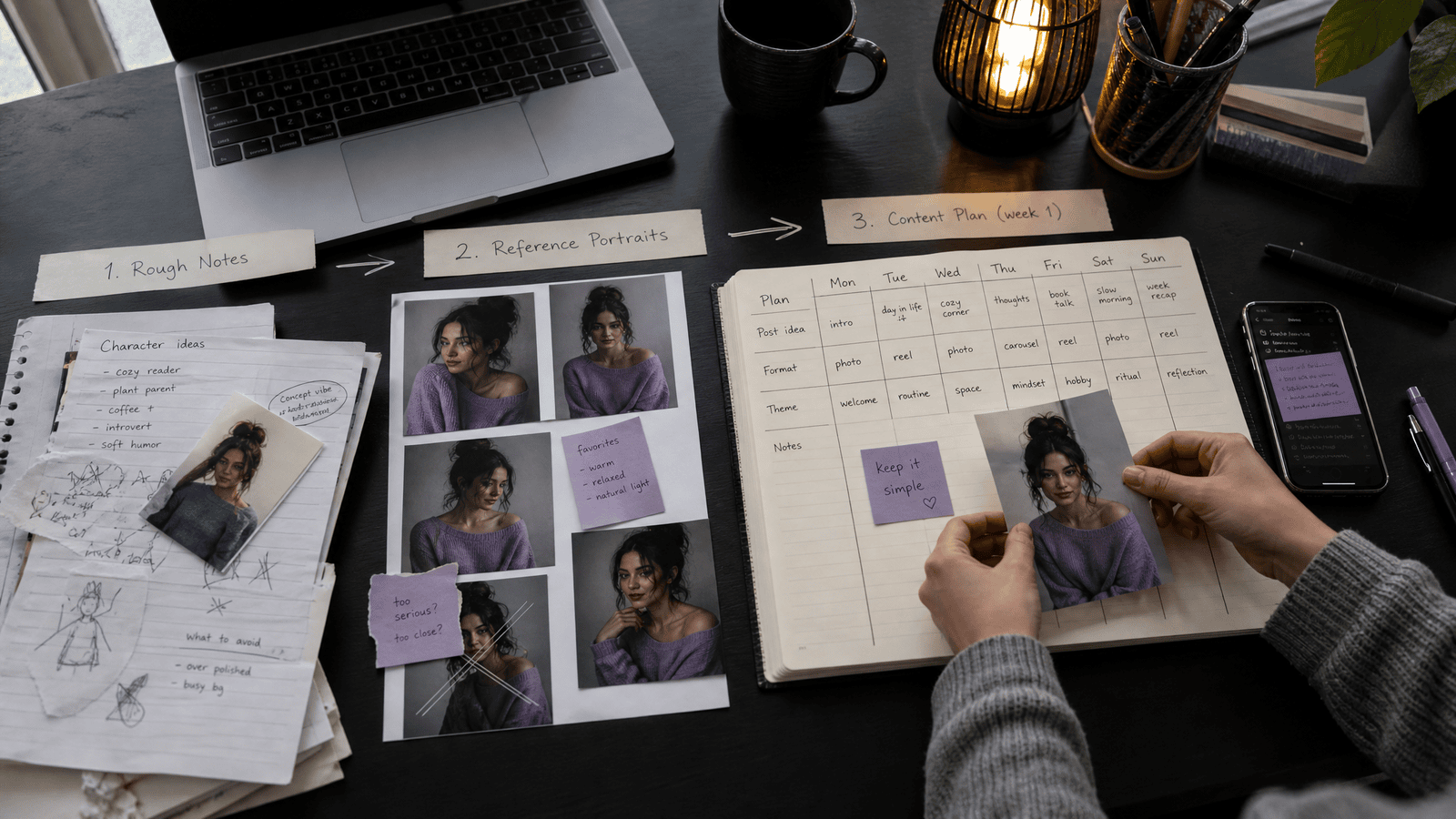
1. Choose an audience and a job for the account
Start with a person and a recurring need. “People interested in fashion” is broad. “Early-career professionals building a five-day office wardrobe” suggests useful posts immediately.
Write three lines:
- Audience: who is this for?
- Job: what does the account help them do, understand, or enjoy?
- Reason to follow: what will appear every week that they cannot get from one post?
Choose a niche because you can contribute ideas, not because someone posted an income screenshot. A weak operator cannot hide behind a polished avatar for long.
2. Design an original adult character
Create a one-page character brief:
- apparent adult age;
- face, hair, build, and stable distinguishing features;
- clothing silhouette and palette;
- temperament and writing voice;
- expertise or interests;
- boundaries and prohibited claims;
- disclosure language;
- source-image and likeness rights.
Do not copy a celebrity, influencer, or existing virtual character. Public photos are not free training data for a commercial likeness.
A memorable character needs a few coherent details. One visual signature and one strong point of view usually beat a paragraph of quirks.
Use the AI influencer names guide after the concept is clear, not before.
3. Build and test the identity
Create or train the character using references you own or have permission to use. Build a neutral approval set before asking for elaborate scenes:
- front portrait;
- both three-quarter angles;
- profile;
- natural smile;
- full-body frame;
- object interaction.
Compare the output for face shape, eye spacing, hairline, skin details, age, and body proportions. Check hands, teeth, and jewelry as separate quality issues.
Consistency means recognizably the same person with natural variation. It does not mean an identical face pasted onto every pose. If the test fails, fix the references or simplify the scene before producing a large batch.
See create an AI influencer from a photo for consent and dataset details.
4. Pick three content pillars
Content pillars are recurring subjects, not formats. A practical style account might use:
- wardrobe decisions;
- garment care;
- behind-the-scenes image critique.
Each pillar should support several post formats: carousel, short video, single image, Q&A, or newsletter. If one pillar only produces generic portraits, replace it.
Create a list of 15 audience questions. Those questions are a better first calendar than a list of trends.
5. Produce a small content library
Prepare nine posts: three pillars, three formats. This is enough to test the account without spending weeks on a feed nobody has seen.
Batch by scene. Finish all approved images for one setting before changing the model, references, lighting language, or wardrobe. Record the prompt and settings for every keeper.
Use a production checklist:
- same character and apparent age;
- plausible anatomy and object contact;
- stable clothing and product shape;
- no accidental logos or unreadable text;
- caption matches what the image actually shows;
- AI disclosure is clear;
- source and usage rights are recorded.
6. Give the character a human editorial voice
Do not write captions as a motivational poster. Make an observation, explain one choice, and ask a question someone can actually answer.
The character can express a fictional point of view. It should not claim to have worn a skincare product for a month, visited a hotel, completed a workout transformation, or earned money. Those are experiences a generated persona did not have.
Process content is useful here. Show a rejected crop, explain why a hand interaction failed, or compare two art-direction choices. The account becomes more interesting when the human judgment is visible.
7. Set up the profile and disclosures
Use a profile image that reads at thumbnail size. Write a bio that states the subject of the account and that the character is virtual or AI-generated. Add one relevant link.
Use the platform's current disclosure tools for realistic generated media and clearly label sponsorships. Meta explains its evolving approach in its AI-content labeling guidance.
Do not assume metadata alone will disclose the work. It can be stripped during editing or upload.
8. Publish and learn for 30 days
Start with a manageable pace, such as three or four strong posts per week. Spend time replying to real comments and observing the niche. Avoid purchased followers and automated engagement; both make your early data less useful.
Track:
- saves and shares;
- profile visits;
- follows attributed to a post;
- specific questions in comments and messages;
- repeated quality complaints;
- production time per approved asset.
After a month, keep the formats that create useful signals. Cut the ones that only create passive likes.
9. Choose a business model after you have evidence
An AI influencer can support several businesses:
- creative production for brands;
- licensing an original virtual character;
- sponsored distribution to a real audience;
- affiliate links with clear disclosure;
- educational products or memberships tied to genuine expertise.
Do not promise a standard timeline or monthly income. Results depend on audience, execution, distribution, offer, rights, and sales. Separate content-production fees from audience-access fees, and put usage terms in writing.
For brand asset production, use the AI UGC guide.
10. Review the character every quarter
Archive a canonical portrait and a repeatable six-frame test. Rerun it when you switch models or make a major style change. Update the character bible using audience evidence, but keep the core identity stable.
Also review the concept. Is the account still useful, or has it become a content machine serving its own calendar? A smaller, sharper project is easier to recognize and easier to run.
Frequently asked questions
Do I need technical skills?
No coding is required for most creator tools. You do need visual judgment, clear writing, rights awareness, and the patience to reject weak output.
How much does it cost?
Costs vary with the image and video models, output volume, editing, storage, and distribution. Use current pricing pages and estimate cost per approved asset, not cost per generation.
How long does it take?
A small prototype can be built in days. A dependable character and content system take repeated tests. Set a 30-day learning goal instead of a follower or income promise.
Is it legal?
The answer depends on likeness rights, training sources, copyrights, advertising claims, contracts, and jurisdiction. Use original or licensed material, disclose synthetic media, and get legal advice for high-risk commercial work.
Can I run more than one character?
Yes, but start with one. Multiple characters multiply quality control, calendars, audience work, and rights records. Add another only after the first process is stable.
What is the first thing I should make?
One page of positioning, six identity-test images, and three useful post ideas. If those pieces do not fit together, more generation will not fix the concept.